A garage door is more than a portal between your home and the world; it is a complex mechanical system composed of numerous components, each with its own function, wear pattern, and expected cycle life.
Understanding the cycle life of garage door components is crucial for technicians and facility managers alike, as it helps in planning maintenance, budgeting for replacements, and ensuring the seamless operation and safety of the entire system.
Introduction to Cycle Life
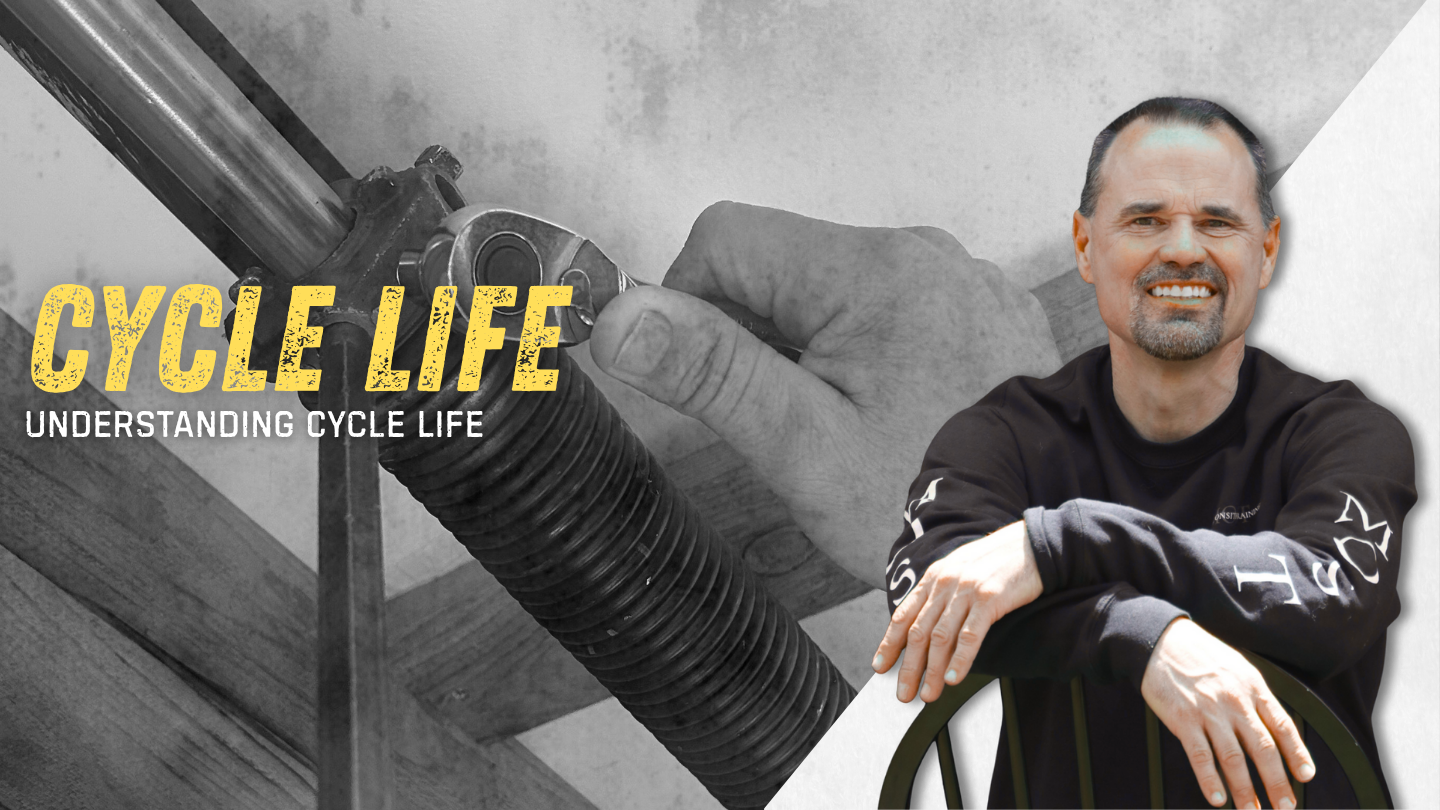
In the garage door industry, the term “cycle life” refers to the number of complete opening and closing actions a component is expected to perform before it requires maintenance, repair, or replacement. One cycle is defined as the door fully opening and then fully closing.
What Impacts Cycle Life?
Several factors determine how long a garage door component will last:
-
Material & Build Quality — Heavier-duty materials and well-designed components tend to offer longer cycle life.
- Frequency of Use — Residential doors may cycle a few times a day, while commercial doors may see dozens or even hundreds.
- Maintenance Habits — Regular lubrication, proper alignment, and routine inspections all play a big role in extending part life.
- Environmental Conditions — Exposure to humidity, dust, extreme temperatures, or salt in the air can accelerate wear and reduce reliability.
Understanding the role of springs, their typical cycle life, and maintenance needs can help prevent sudden failures and ensure long-term reliability.
Torsion Springs
Torsion springs are the workhorses of the garage door system. Mounted above the door, they counterbalance the weight of the door, making it possible to lift and lower the door with minimal effort.
Typical Cycle Life
- Standard Torsion Springs:
- 10,000 Cycles
- Roughly 7 - 10 years with moderate use (3-4 cycles per day)
- High-Cycle Springs:
- 20,000 - 50,000 Cycles
- Can exceed 15 - 20 years in residential settings (3-4 cycles per day)
Extension Springs
Extension springs serve a similar function to torsion springs but are usually mounted along the door’s horizontal tracks. They stretch and contract to provide the necessary force.
Typical Cycle Life
- Standard Extension Springs:
- 10,000 Cycles
Maintenance Tip: Extension springs should always be replaced in pairs to ensure balanced operation.
Rollers
Rollers are the small but essential components that allow the garage door panels to glide along the tracks during opening and closing. When functioning properly, they help ensure quiet, efficient movement and reduce strain on the opener and other hardware.
Cycle Life
- Plastic Rollers:
- 10,000 - 12,000 Cycles
- Steel Rollers:
- 10,000 - 20,000 Cycles
- Nylon Rollers with Ball Bearings:
- 20,000+ Cycles
Maintenance Tip: Regular lubrication of rollers will extend cycle life
Cables
Cables are critical components that work alongside the springs to lift and lower the garage door safely and evenly. Made of strong, flexible steel, these cables wind and unwind around drums as the door operates.
While they may not seem as prominent as springs, they carry just as much tension and are vital for balanced movement. Fraying, rust, or kinks in the cables can lead to serious safety hazards, so regular inspection is key.
Cycle Life
The cycle life of cables usually matches the cycle life of the associated spring. Usually 10,000 to 20,000 cycles.
Since both components share the load during operation, it’s common practice to inspect or replace them together to ensure balanced, reliable performance.
Common Signs of Ware
Damaged cables can pose serious safety risks, potentially leading to door failure or injury if left unchecked. Regular inspections and timely replacements are key to keeping the system safe and functional.
- Fraying
- Rust
- Kinks